Australian universities have always been institutions of transformation. Places where ideas are challenged, futures are shaped, and knowledge is advanced. But rarely has the sector itself undergone transformation at the pace and pressure of the last five years.
From the shock of wage theft investigations touching nearly every Group of Eight institution, to the sweeping obligations of the Australian Universities Accord, the teaching disruption of COVID, and the new reality of AI in the classroom; today’s university bears little resemblance to the one that existed in 2020.
It’s worth pausing to take stock of what has changed, what the sector still hasn’t solved, and where the real opportunity lies for institutions prepared to lead.
The numbers that changed everything for higher education
No honest account of the last five years can start anywhere other than wage theft.
Between 2020 and 2024, the National Tertiary Education Union documented more than $107.8 million in underpayments across 22 Australian public universities – a figure that is nearing $400 million when later settlements and remediation provisions are included.
These were not cases of bad intentions. They were, in large part, the product of structural complexity. A sector built on a casualised workforce governed by intricate Award and EBA rules that existing systems simply could not handle at scale. Casual academics, who perform marking, preparation, consultation, and teaching across fragmented timetables, were routinely underpaid because there was no reliable way to capture the full scope of the work being done.
The Fair Work Ombudsman took notice, and legal action was commenced against multiple universities. The sector went from being a compliance afterthought to a headline enforcement priority virtually overnight.
The investigations made it clear that the problem began long before payroll. It started in scheduling, in activity capture, in the absence of real-time visibility over when and how academic work was performed.
The pressures that accelerated the shift and student equation
Wage compliance didn’t arrive in isolation. From conversations with operational teams at Go8 universities, it’s evident that this flashpoint wasn’t due to only one thing, rather, several pressures hitting all at once.
COVID accelerated digital learning almost overnight, creating workforce blind spots and compliance risk. And a delivery model that looked nothing like it did five years ago created new complexity in how academics are scheduled, how their work is captured, and how institutions demonstrate payments.
Internally, governance pressure was mounting. Externally, the student landscape was shifting just as fast.
International enrolments collapsed in 2020 and 2021, rebounded sharply, then faced the government’s move to cap international student numbers from 2025 to manage housing pressure in major cities. Institutions that had relied on international fee income as a financial buffer found that buffer subject to policy risk in ways that hadn’t been fully contemplated.
Domestic students changed too as the pandemic accelerated the flexible, work-integrated learning trend.
The institutions gaining ground are treating their student experience as an operational excellence challenge, not just an engagement one. That means the systems, people, and processes behind the scenes must work too.
Add to this the Australian Universities Accord’s explicit call for universities to become exemplary employers. This is a compliance expectation backed by regulatory attention. For HR, finance, and technology leaders inside universities, the Accord set a new bar to build systems that prevent these issues from happening again.
Operationally, the tools that once sat in the background are now shaping policy, planning, and performance.
Where compliance can break down for casual academic and professional teacher scheduling
The compliance failures that led to $400M in underpayments didn’t originate in payroll. Compliance gaps and risk already exist by the time payroll happens. Non-compliance can be created earlier in how work was scheduled, whether activity rules were applied correctly, and whether the right context was captured at the point work actually happened.
Planned unscheduled activities, minimum engagement rules, repeat activity payments are everyday realities for anyone managing casual academic workforces.
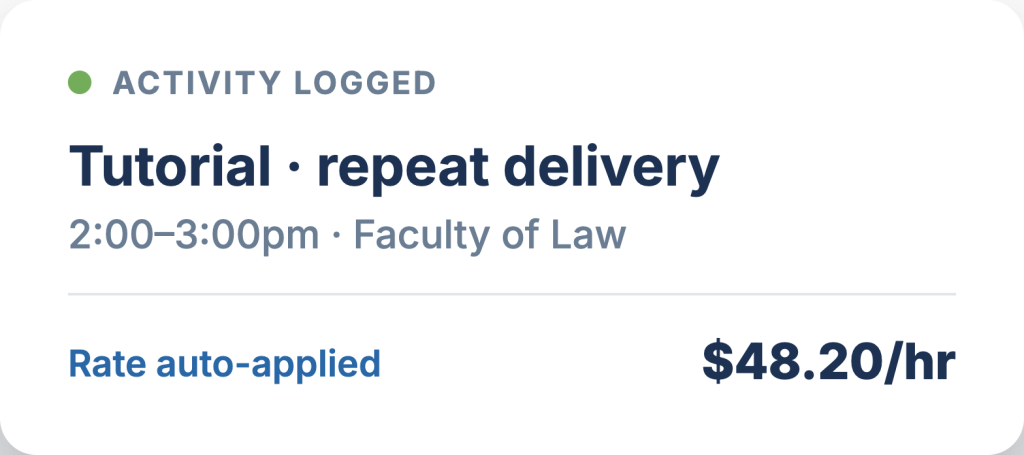
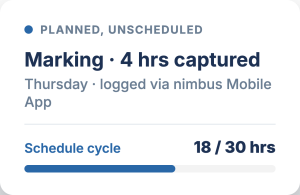
Inconsistency is almost inevitable when payments are retrospectively adjusted based on timesheets and out-of-system approvals.
The institutions that have moved furthest have stopped treating wage compliance as simply a problem originating in the payroll process. They’ve embedded compliance logic at the scheduling stage so that rules are applied where work is planned, not recovered after it’s processed.
Higher Education workforce management: from admin burden to human governance
Much of the current dialogue about technology focuses on AI in teaching, assessment, and research. These conversations matter. But they risk drowning out an important opportunity: using technology to recover the time currently consumed by unnecessary administration at every level of the institution.
A purpose-built workforce management platform removes the need for faculty administrators to manually reconcile casual academic timesheets. It eliminates the end-of-semester scramble to verify whether activity payments were correctly applied. It replaces the spreadsheet someone maintains in their own faculty with a single, structured, auditable system.
Every hour recovered from administration is an hour redirected toward investing in real-world research and delivering exception teaching – the things that differentiate a university.
What the evolving university looks like
The institutions leading this shift aren’t just technology-centred, they’re people-first.
- They understand their workforce complexity and have invested in systems that manage it.
- They’ve applied award and compliance rules at the point where work is planned.
- They've reduced the administrative overload that creates both compliance risk and staff frustration.
- They've connected data to ensure visibility of work, time and pay across faculties.
And they’ve moved from a stance of remediation to one of prevention.
The question is no longer: “how did this underpayment happen?”
It’s: “what does our system do to make sure it can’t?”
When institutions transition to more structured workload planning and standardised compliance governance, casual academics and professional staff can be confident they’re paid for the work they do and the time spent doing it. For institutions, this means being an employer of choice – bringing in the best minds and leaders to create exceptional learning environments and build thriving student communities.
That is a meaningfully different university from the one that existed five years ago. And it is one far better positioned for whatever the next five years will bring.
Learn more about nimbus for Higher Education
nimbus is Australia’s trusted workforce management platform for higher education, supporting universities and TAFEs with flexible scheduling, activity capture, and semester planning built for how academic work is done.
Ready to learn more about nimbus workforce management for higher education? Book a call with our consulting team.